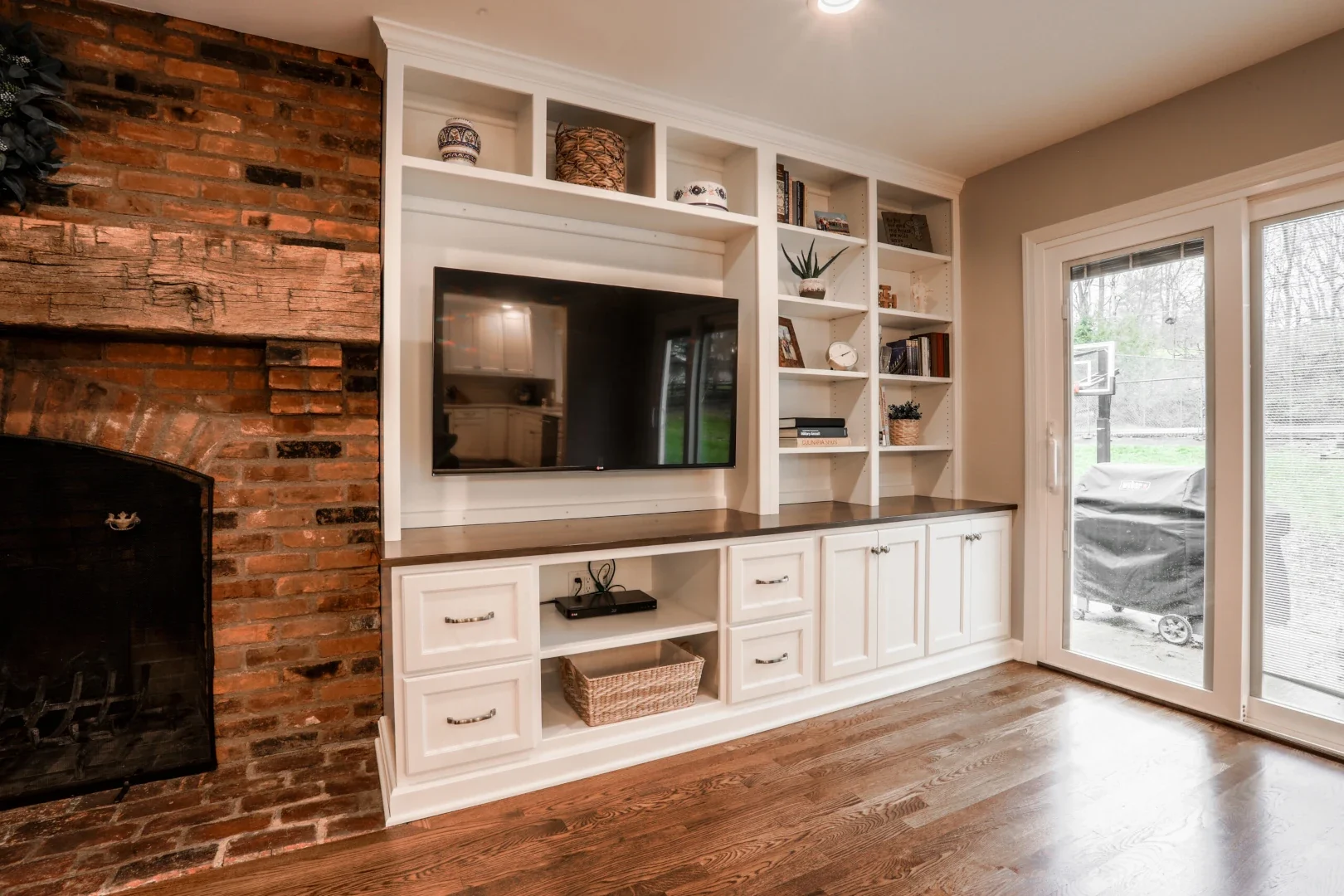
When you begin a kitchen remodel, you are quickly faced with a fork in the road. On one side is the path of convenience: stock cabinets. They are sitting in a warehouse, ready to ship, and priced for the budget-conscious. On the other side is the path of craftsmanship: Amish-made heirloom cabinetry.
For many homeowners, the price tag of stock cabinets is tempting. But for those looking at their home as a long-term investment, the savings of stock cabinetry often vanish within a few years.
1. Materials: real hardwood vs. particle board
Mass producers often use particle board, MDF, or thin plywood veneers to keep costs low. These materials are susceptible to moisture, the number one enemy of kitchens. Once particle board absorbs water, it swells, peels and loses its structural integrity. We use solid, kiln-dried hardwoods sourced from North America: oaks, maples, cherries and hickories, which handle the humidity and heat of a busy kitchen without warping.
2. Construction: dovetails vs. staples
Most stock options use butt joints held together by glue, staples or plastic corner brackets. Over time, the repetitive motion of opening drawers and the weight of heavy pots pulls these joints apart. Amish craftsmen use the English dovetail, an interlocking joint that is mechanically strong on its own, even before any adhesive is added.
3. Precision fit: no filler required
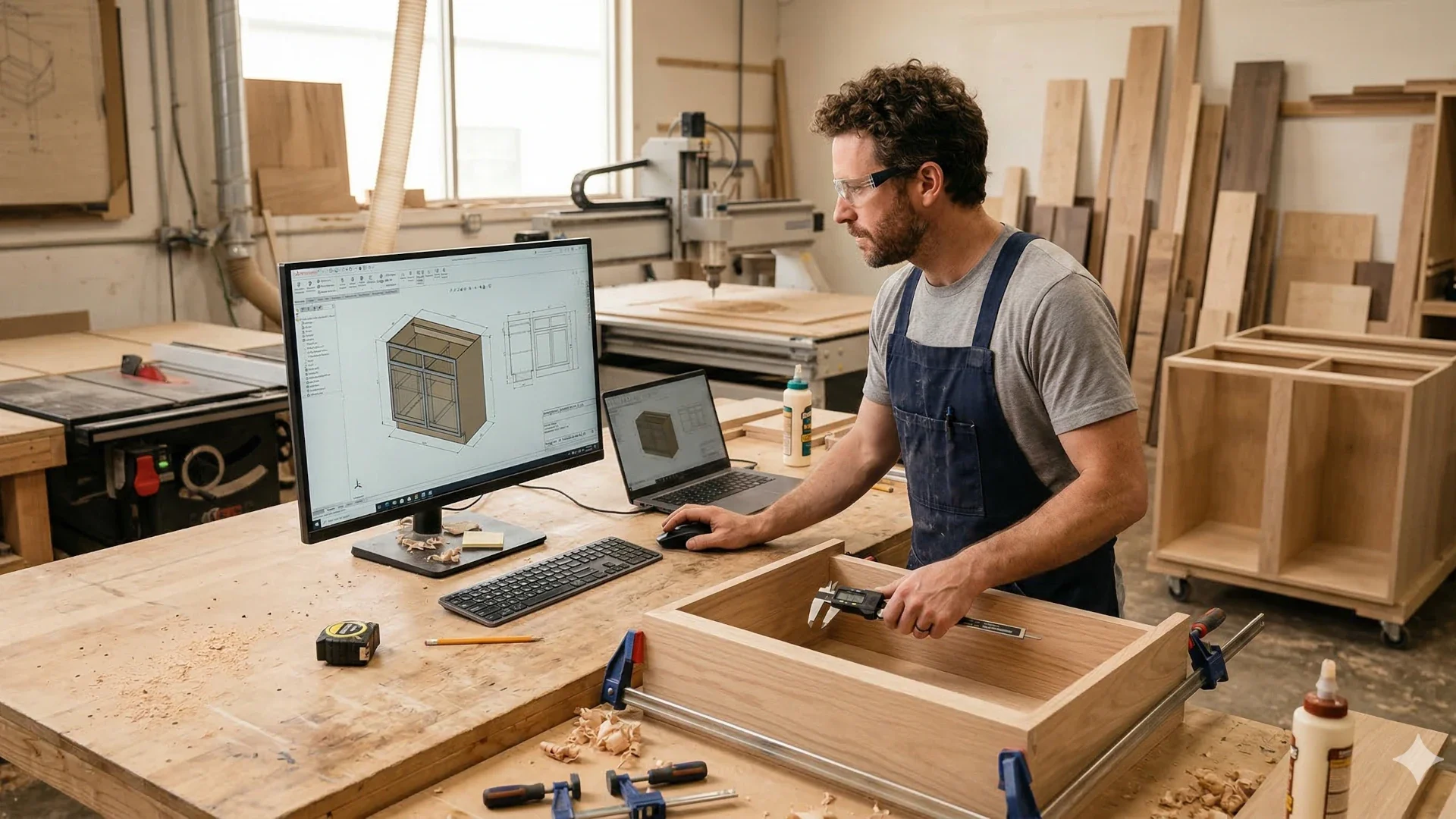
Kitchens are rarely perfectly square, yet stock cabinets only come in standard three-inch increments. If your wall is 100 inches long you will likely end up with several inches of filler strips, dead space covered by a flat piece of wood. Our cabinetry is built to the sixteenth of an inch, so the cabinets fit your walls rather than the other way around.
4. The finish: hand-applied vs. assembly line
Stock cabinets are finished on high-speed assembly lines, and those coatings are often thin and prone to wearing through around the handles within five to seven years. Each of our pieces is hand-sanded and finished by artisans, using high-conversion varnishes that resist household chemicals, water and UV fading.
5. The financial logic
The average lifespan of a stock kitchen is seven to twelve years before the hinges sag, the drawers stick or the finish peels. If you stay in your home for thirty years, you may replace a stock kitchen three times. Investing in Amish cabinetry means you buy your kitchen once.
The verdict
Stock cabinets are a temporary solution, designed for quick refreshes. If you are building your forever home, or renovating a space where memories will be made for decades, Amish cabinetry is the only true lifetime investment.